
Cloud Infrastructure / DevOps
DevOps modernization: from three-week releases to deploying several times a day
We modernized an enterprise SaaS provider’s DevOps pipeline with Terraform, Kubernetes and automated CI/CD, moving releases from every three weeks to several times a day with a failure rate under 0.5%.
Published
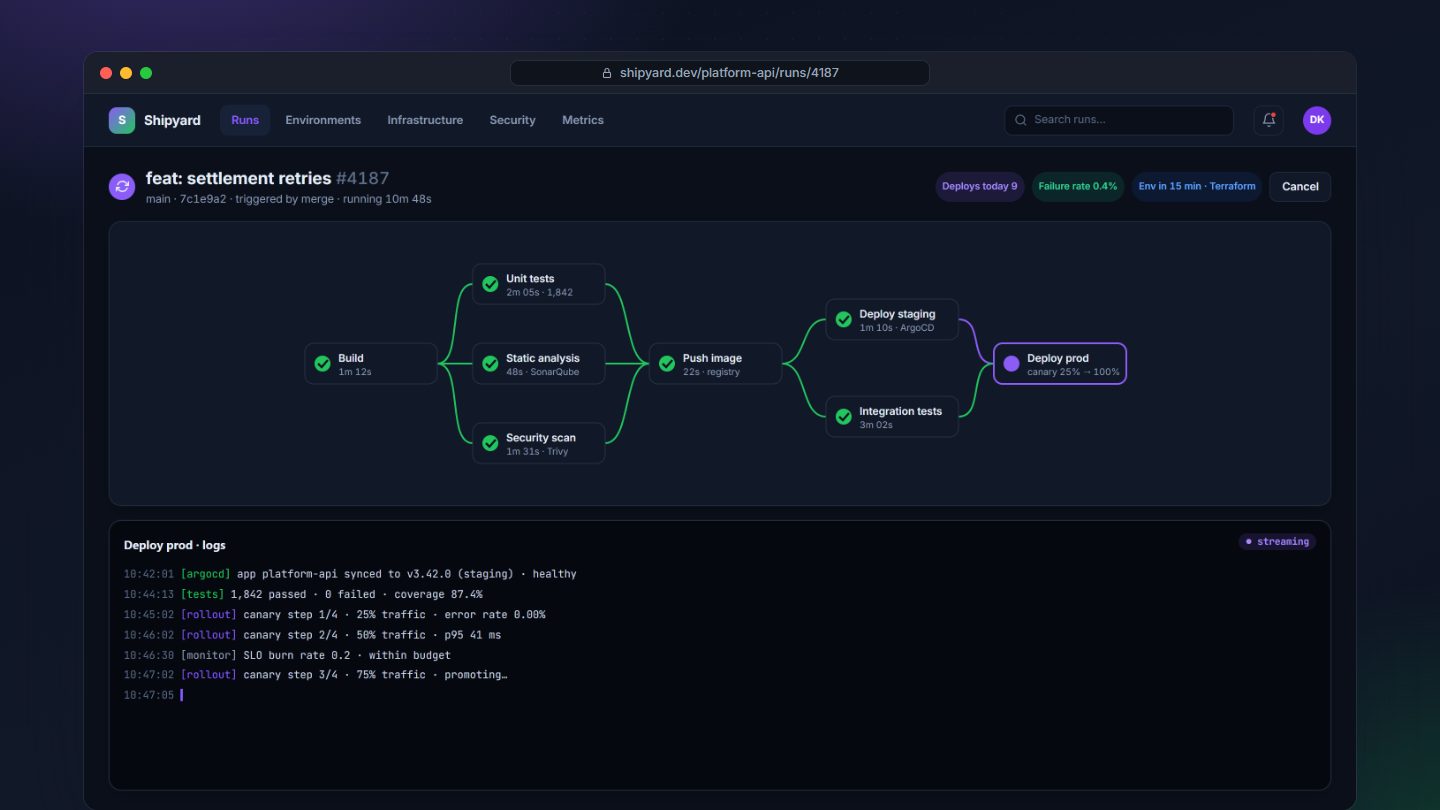
Daily+
releases, up from one every 3 weeks
<0.5%
deployment failure rate, down from 18%
15 min
infrastructure provisioning, down from 2 weeks
Project snapshot
- Client
- Enterprise SaaS software provider
- Industry
- Cloud Infrastructure & Enterprise DevOps
- Region
- Global, remote-first team
- Year
- 2026
- Scale
- 50+ engineers and 200,000 active enterprise users
- Timeline
- 3 months
- Engagement
- Consulting and implementation retainer
The challenge
Manual deployments, inconsistent staging environments and no infrastructure as code meant each release took over three weeks. Development, staging and production regularly drifted apart.
That slowed new features to market, made manual server updates error-prone and stretched outage recovery.
The setup relied on shell scripts and ad-hoc AWS console changes that no single engineer could fully audit or reproduce.
What we did
Phase 1: Everything as code
We wrote the full infrastructure as Terraform across AWS and Azure.
Why: For reproducible, version-controlled infrastructure with no manual console changes.
Phase 2: Standard container delivery
We standardized microservice deployments on Docker and Kubernetes (EKS and AKS).
Why: For consistent behavior in every environment and simpler scaling.
Phase 3: Quality gates in the pipeline
We added CI/CD pipelines with security scanning, static analysis and automated integration tests.
Why: To catch bugs and vulnerabilities before they reach production.
Phase 4: See problems fast
We set up centralized logging and application performance monitoring with automated pager alerts.
Why: To cut mean time to resolution from hours to minutes.
The hard part
Containerizing stateful databases
We moved running stateful database instances into containerized cloud clusters without dropping active client sessions.
How we kept risk low
We built immutable staging environments that mirror production exactly, so every release was validated before it shipped.
The solution
All infrastructure is provisioned from version-controlled Terraform modules across AWS and Azure. Each commit triggers GitHub Actions workflows that run security scans, build Docker images and push them to private registries. ArgoCD keeps Kubernetes clusters in sync with Git, giving self-healing deployments and automatic rollback on failure.
Tech stack
- Back end
- Microservices (.NET Core, Node.js)
- Front end
- Angular, React
- Database
- PostgreSQL, Redis
- Cloud
- AWS (EKS, RDS, CloudFront) and Azure
- DevOps
- Terraform, GitHub Actions, ArgoCD, Prometheus, Grafana, Datadog
- Other
- SonarQube, Trivy container scanner
Results
| Metric | Before | After | How it was measured |
|---|---|---|---|
| Release frequency | Once every 3 weeks | Multiple times per day | GitHub Actions deployment logs |
| Deployment failure rate | 18% rollback rate | Under 0.5% | Production incident tracking records |
| Infrastructure provisioning | 2 weeks of manual setup | 15 minutes via Terraform | Provisioning audit logs |
Better engineering morale, no more weekend deployment fire drills and infrastructure that is ready for compliance audits.
What the client said
Vincera completely overhauled our delivery pipeline. What used to take weeks of stressful manual work now happens automatically with complete peace of mind.
Lessons learned
We would enforce branch protection rules earlier in the repository setup.
What’s next
Multi-region automated failover testing.
Related case studies
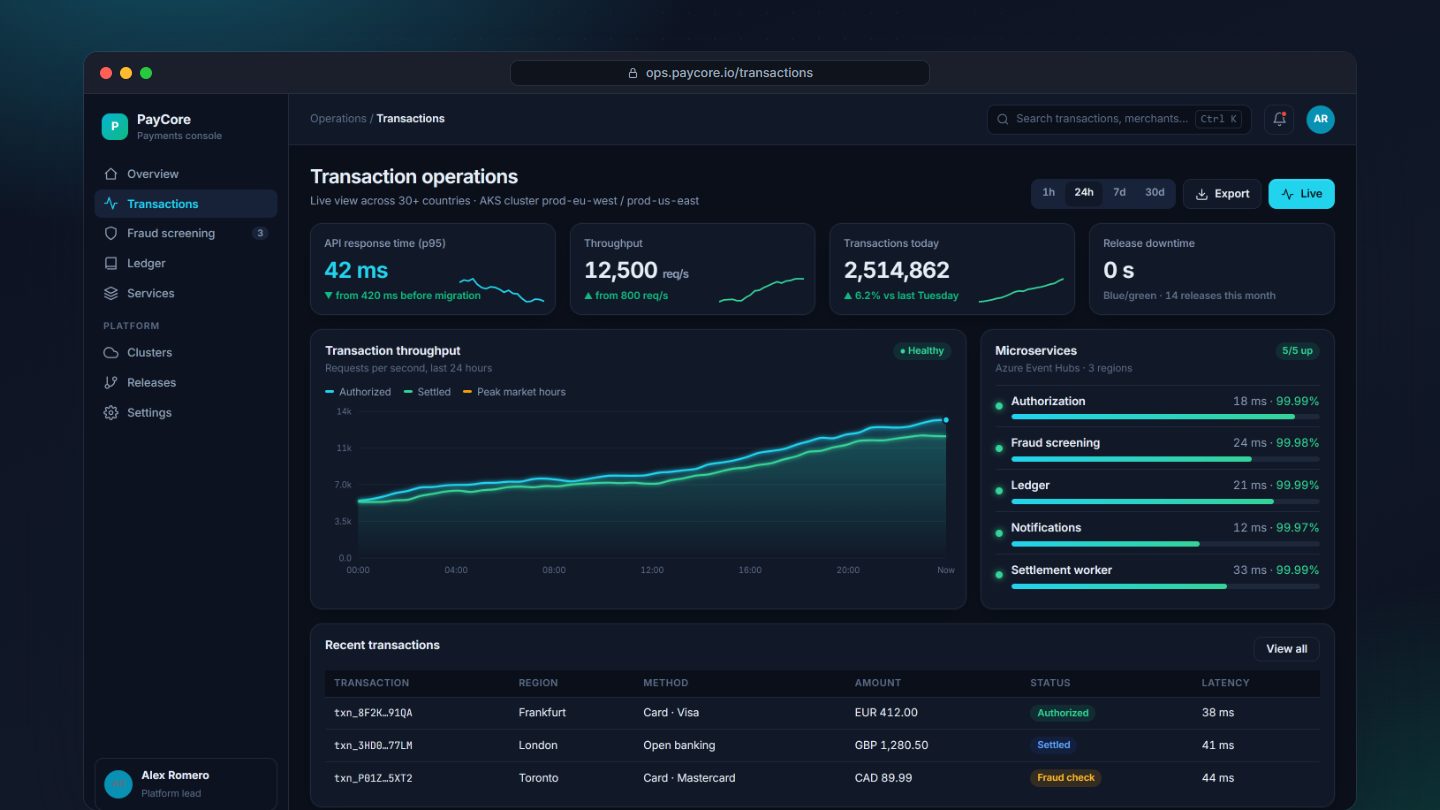
Fintech / Payments
Cutting payment API latency from 420ms to under 45ms for a global payments platform
- Challenge
- A legacy monolithic payment gateway hit latency spikes at peak hours, causing checkout timeouts and limiting how far it could scale.
- Outcome
- A .NET Core microservices platform on Azure now serves over 2.5 million daily transactions with API responses under 45ms and zero-downtime releases.
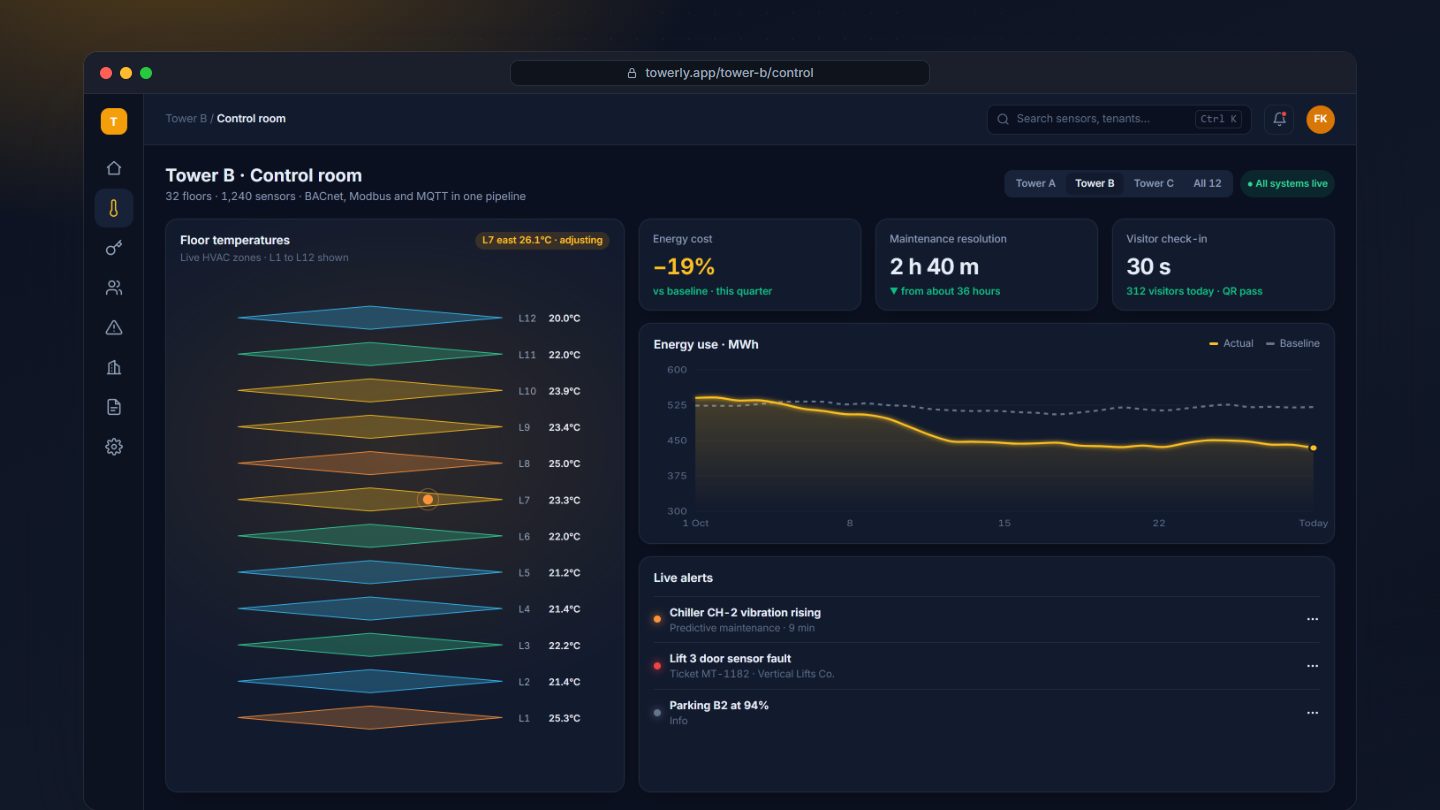
PropTech / Real Estate
IoT building management for 12 office towers: one platform and one tenant app
- Challenge
- Paper visitor logs, fragmented HVAC controls and slow maintenance ticketing drove up operating costs and tenant frustration.
- Outcome
- A unified IoT platform and tenant app cut maintenance resolution to under 3 hours and building energy costs by 19%.
Read the case study: IoT building management for 12 office towers: one platform and one tenant app
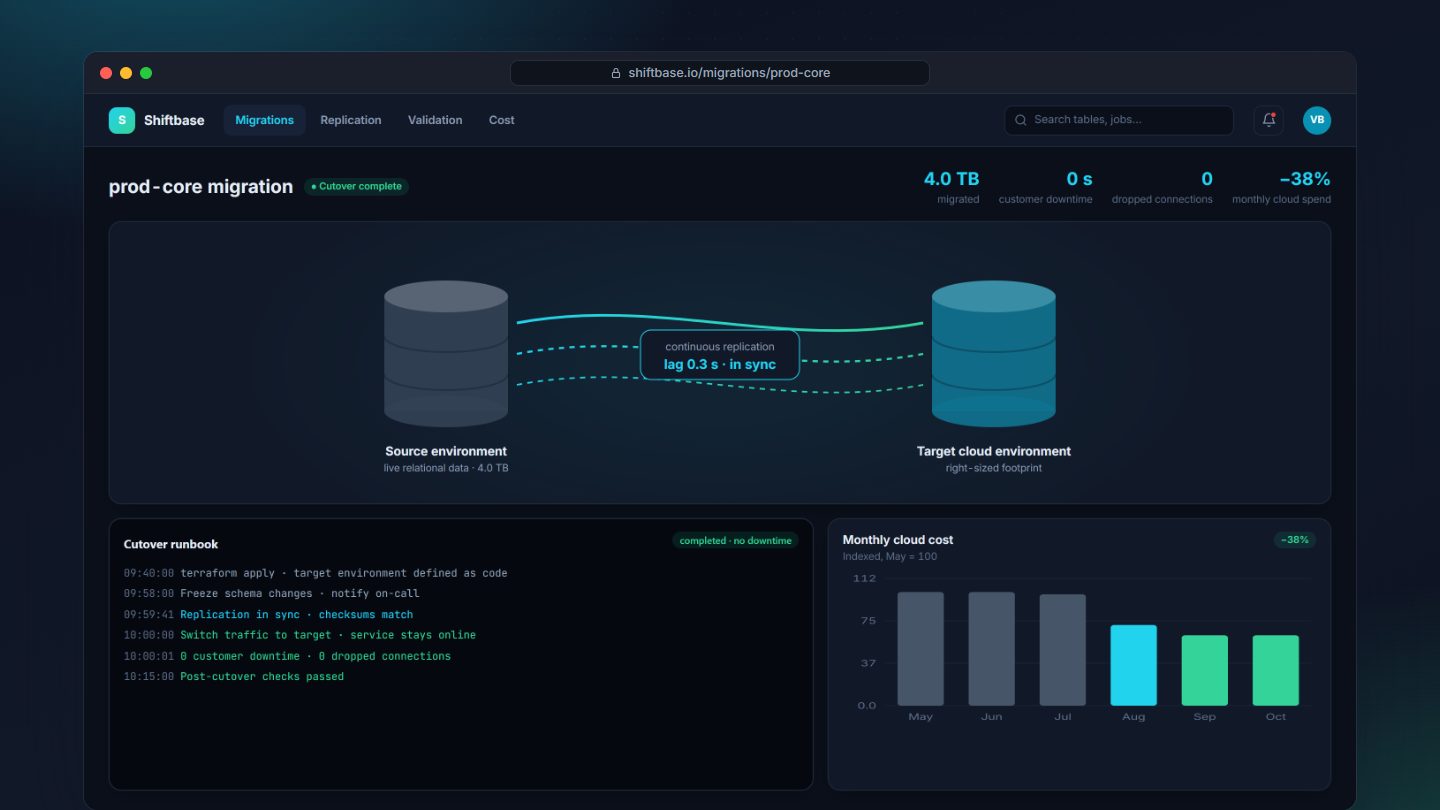
Enterprise SaaS / Cloud
Zero-downtime migration of 4TB of live data, with 38% lower cloud spend
- Challenge
- A SaaS provider needed to move a large live database and bring cloud costs under control without interrupting customers.
- Outcome
- 4TB of live relational data was migrated with zero downtime, and monthly cloud spend dropped by 38%.
Read the case study: Zero-downtime migration of 4TB of live data, with 38% lower cloud spend