
Fintech / Payments
Cutting payment API latency from 420ms to under 45ms for a global payments platform
We migrated a legacy monolithic payment gateway to .NET Core microservices on Azure, bringing API latency under 45ms, lifting throughput from 800 to 12,500 requests per second and removing release downtime.
Published
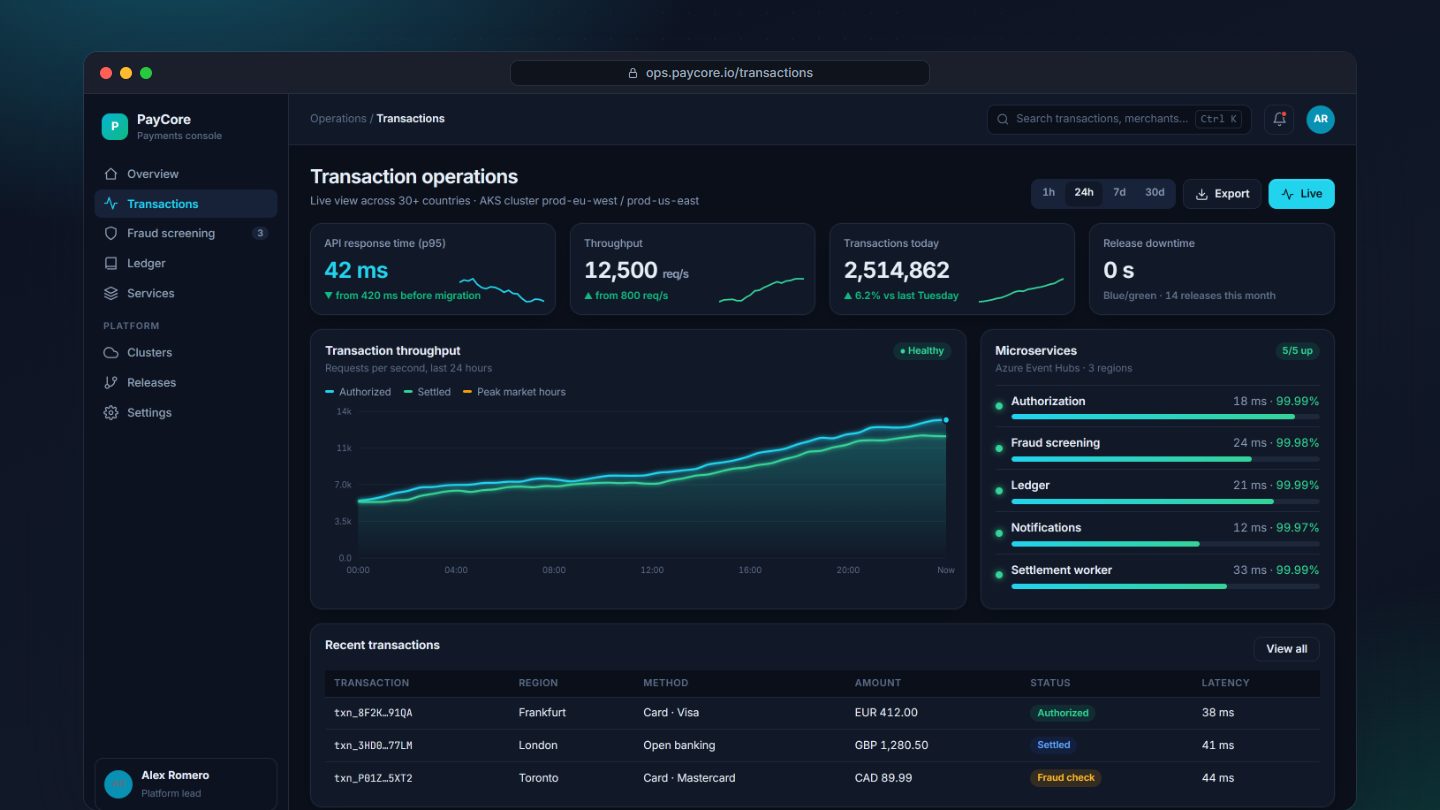
<45ms
API response time, down from 420ms
12,500
requests per second, up from 800
Zero
release downtime, down from 45 minutes
Project snapshot
- Client
- Global cross-border payments processor
- Industry
- Fintech / Payments
- Region
- North America & Europe
- Year
- 2025–2026
- Scale
- Over 2.5 million transactions a day across 30+ countries
- Timeline
- 5 months
- Engagement
- Fixed scope, followed by an ongoing retainer
The challenge
The client’s legacy monolithic payment gateway saw latency spikes at peak transaction hours, with response times around 420ms. Transactions timed out, and the system could not scale horizontally.
Merchants complained during flash sales. Timed-out checkouts meant lost revenue, and a monolith that used resources inefficiently kept cloud costs high.
The team had already tried vertical scaling with larger server instances, but database connection pool saturation hit hardware limits quickly.
What we did
Phase 1: Profile under real traffic
We profiled the system under production-like traffic spikes to find database lock bottlenecks.
Why: So architectural changes were based on hard metrics, not assumptions.
Phase 2: Decompose the monolith
We split it into domain-driven .NET Core microservices that communicate through asynchronous event buses.
Why: Authorization, ledgering and notifications can now scale independently.
Phase 3: Move data to a global store
We migrated persistent data to Azure Cosmos DB with geo-replication and optimized indexing.
Why: To keep reads and writes fast across global regions.
Phase 4: Zero-downtime releases
We built blue/green deployment pipelines with GitHub Actions on Azure Kubernetes Service (AKS).
Why: To remove scheduled maintenance windows and ship continuously.
The hard part
Keeping transactions consistent
We had to keep full transactional integrity (ACID) across distributed microservices without adding locking bottlenecks. We solved it with the Outbox pattern and event-driven messaging.
How we kept risk low
We ran the new microservices in parallel with the legacy monolith, sent 5% of traffic to them first as a canary, then moved volume across gradually until they carried 100%.
The solution
Incoming payment requests reach an Azure Application Gateway and are routed to containerized ASP.NET Core microservices on AKS. Authentication, fraud screening and ledger processing run as decoupled worker services that communicate through Azure Event Hubs. Transaction records live in globally replicated Azure Cosmos DB, with Redis caching for fast session lookups.
Tech stack
- Back end
- .NET Core 8, C#, ASP.NET Core Web API
- Front end
- Angular 18 (dashboard)
- Database
- Azure Cosmos DB, Redis Cache
- Cloud
- Microsoft Azure (AKS, App Service, Event Hubs)
- DevOps
- GitHub Actions, Terraform, Docker
- Observability
- OpenTelemetry, Prometheus, Grafana
Results
| Metric | Before | After | How it was measured |
|---|---|---|---|
| API response time | 420ms | Under 45ms | Azure Application Insights and Prometheus metrics |
| Throughput | 800 requests/sec | 12,500 requests/sec | Load test simulation and production telemetry |
| Release downtime | 45 minutes per release | 0 seconds (blue/green) | CI/CD pipeline execution logs |
Customer support complaints about checkout timeouts disappeared, and cloud compute spend fell by 34% through more efficient container resource pooling.
What the client said
Vincera’s architectural overhaul completely transformed our core payment reliability. We sailed through Black Friday traffic without a single dropped packet.
Lessons learned
Adding distributed tracing from day one saved countless hours of debugging in staging.
What’s next
Expanding to multi-region active-active disaster recovery.
Related case studies
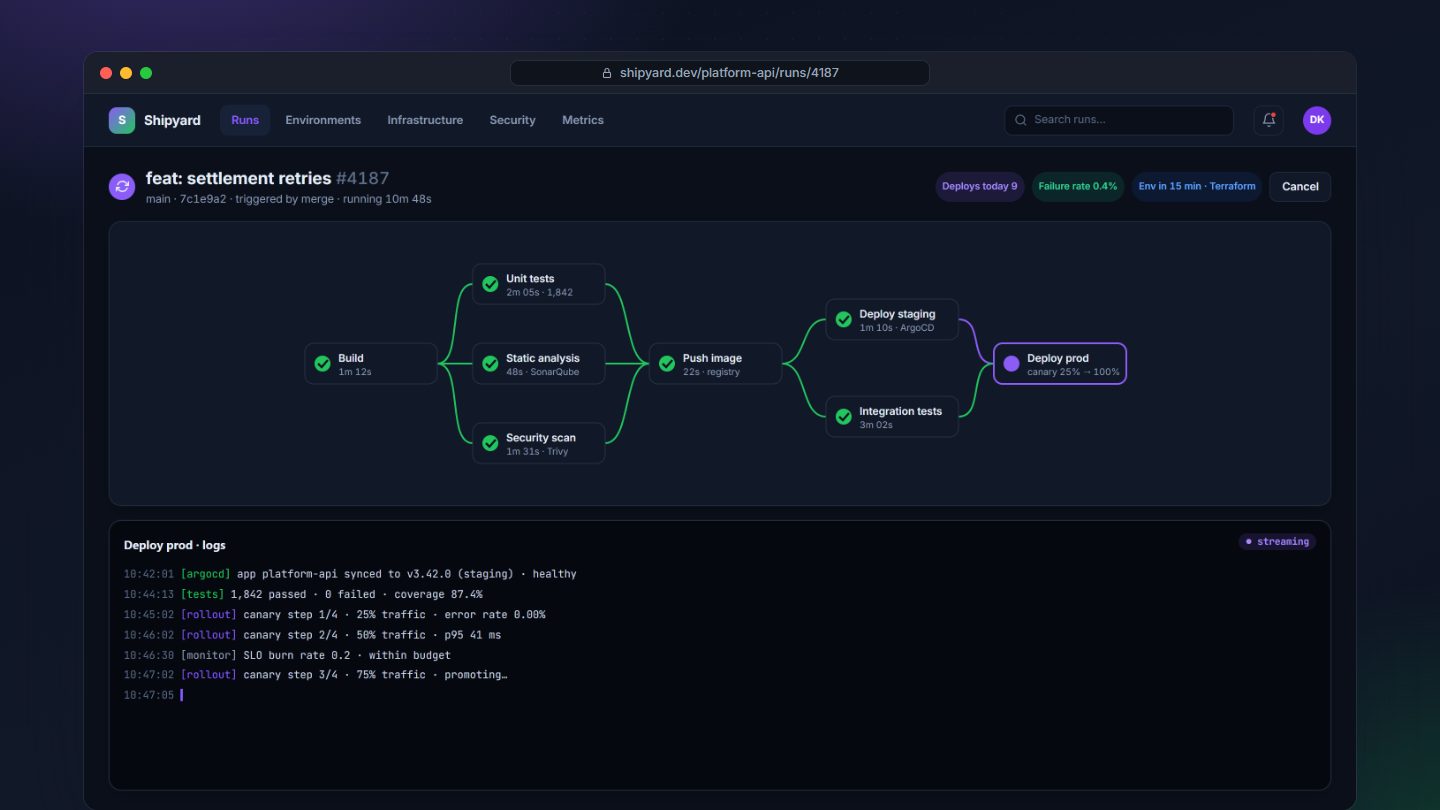
Cloud Infrastructure / DevOps
DevOps modernization: from three-week releases to deploying several times a day
- Challenge
- Manual deployments and inconsistent environments meant releases took over three weeks and configuration drifted between stages.
- Outcome
- Infrastructure as code and automated CI/CD on AWS and Azure now let the team release several times a day.
Read the case study: DevOps modernization: from three-week releases to deploying several times a day
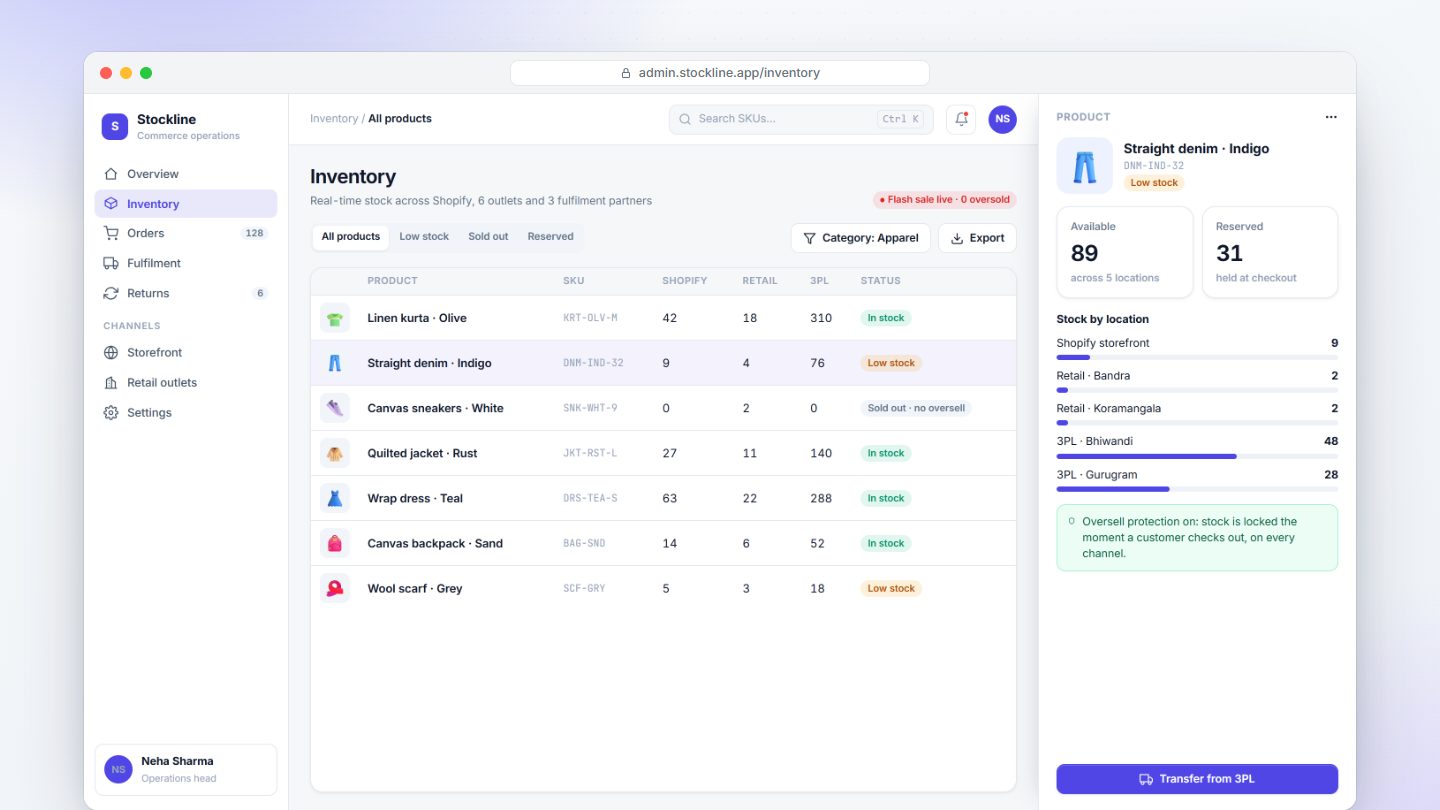
E-Commerce / Logistics
Headless e-commerce and real-time inventory sync for a D2C apparel brand
- Challenge
- Inventory was out of sync between the Shopify store, retail outlets and logistics partners, so flash sales led to overselling and late deliveries.
- Outcome
- A real-time inventory hub and headless storefront removed overselling and cut fulfillment processing from 24 hours to under 2.
Read the case study: Headless e-commerce and real-time inventory sync for a D2C apparel brand
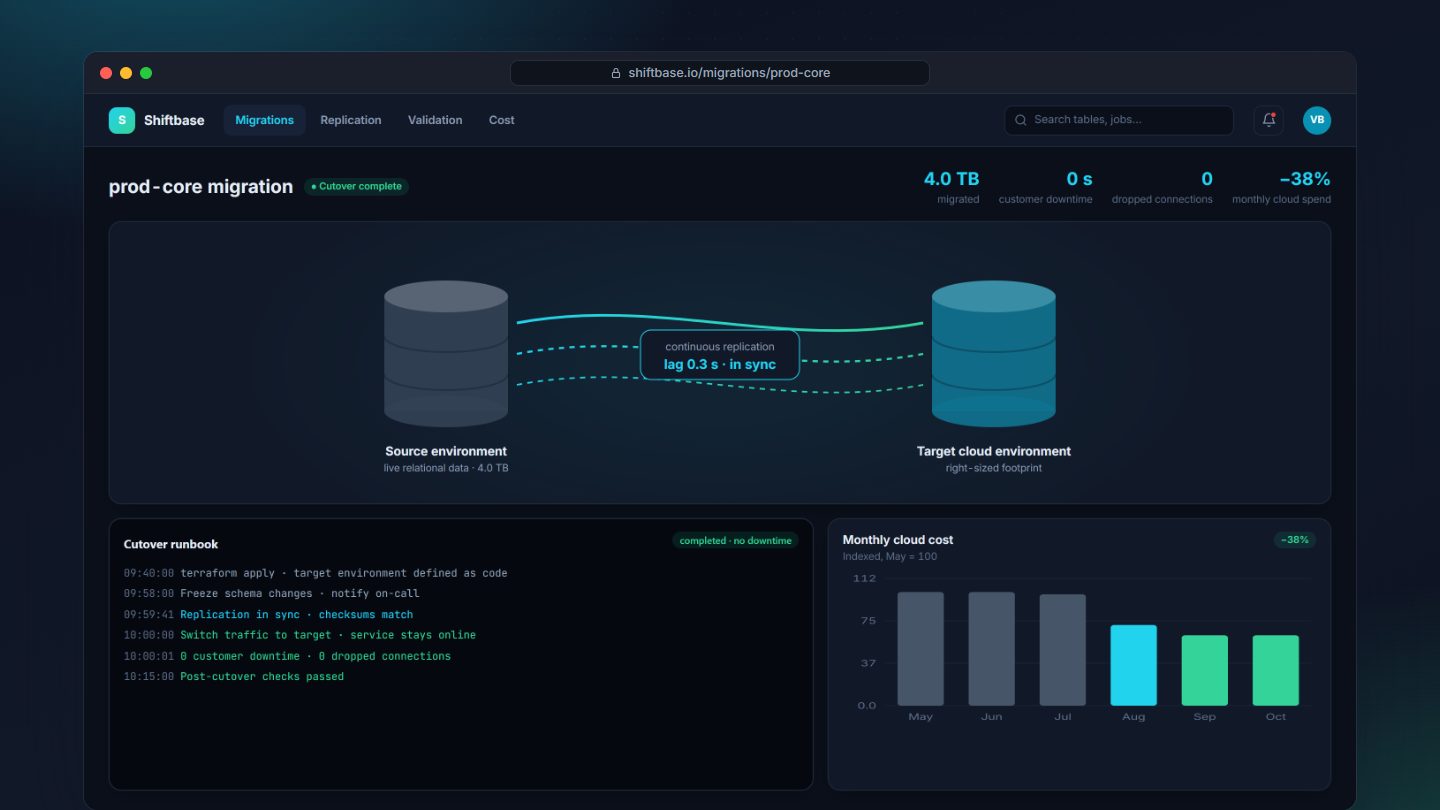
Enterprise SaaS / Cloud
Zero-downtime migration of 4TB of live data, with 38% lower cloud spend
- Challenge
- A SaaS provider needed to move a large live database and bring cloud costs under control without interrupting customers.
- Outcome
- 4TB of live relational data was migrated with zero downtime, and monthly cloud spend dropped by 38%.
Read the case study: Zero-downtime migration of 4TB of live data, with 38% lower cloud spend