
E-Commerce / Logistics
Headless e-commerce and real-time inventory sync for a D2C apparel brand
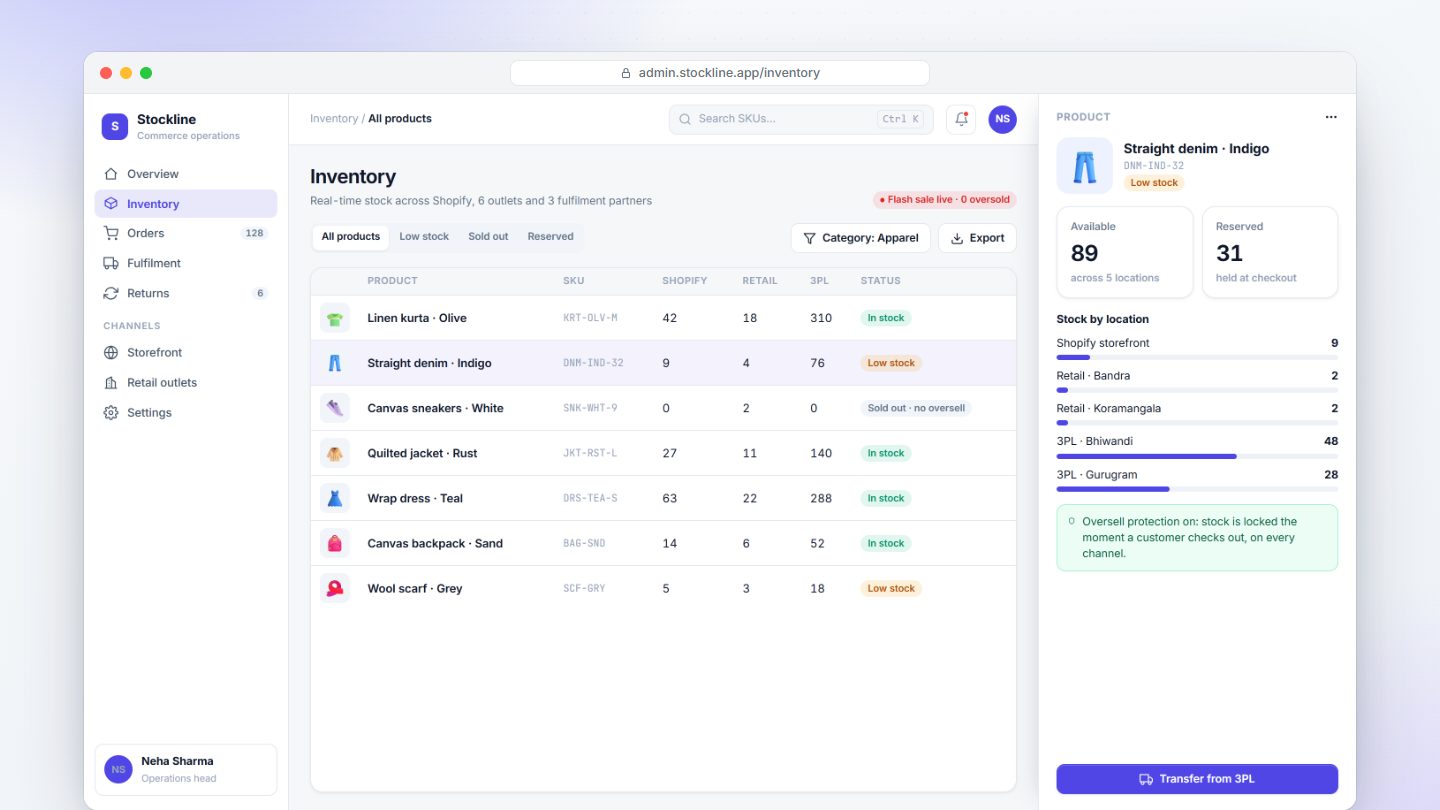
We built a real-time inventory hub and a headless Shopify storefront on Next.js for a D2C apparel brand, ending flash-sale overselling and cutting page load from 3.8s to 0.9s.
Published
0.9s
page load (LCP), down from 3.8s
<2 hrs
fulfillment processing, down from 24 hours
0%
overselling, down from 3.2% of flash-sale orders
Project snapshot
- Client
- D2C lifestyle and apparel brand
- Industry
- E-Commerce & Supply Chain Logistics
- Region
- India
- Year
- 2026
- Scale
- 5,000+ daily orders with nationwide home delivery
- Timeline
- 4 months
- Engagement
- Fixed scope with an ongoing support retainer
The challenge
The brand’s inventory was fragmented between its Shopify storefront, retail outlets and third-party logistics (3PL) partners. During flash sales, items were oversold and orders took too long to fulfill.
Cancelled orders from stockouts hurt customer trust, and support teams were swamped with “where is my order?” inquiries.
Manual CSV exports and disconnected plugins could not keep stock in sync in real time.
What we did
Phase 1: A central inventory hub
We built an event-driven inventory hub connecting Shopify, warehouse systems and 3PL couriers.
Why: So stock is locked across every sales channel the moment someone checks out.
Phase 2: Smarter shipping
We built an automated shipping rate calculator and multi-carrier label pipeline.
Why: So each shipment goes with the fastest, most cost-effective courier.
Phase 3: A faster storefront
We rebuilt the front end as a headless Next.js storefront with incremental static regeneration.
Why: To lift mobile conversion and SEO during busy promotions.
Phase 4: Automated returns
We added return (RMA) workflows and customer notification webhooks.
Why: To cut support tickets and streamline reverse logistics.
The hard part
10x flash-sale spikes
Flash-sale drops brought up to ten times normal traffic, and we had to handle them without database locking problems.
How we kept risk low
We ran the new headless front end alongside the existing Shopify checkout and only then switched the domain’s DNS routing over.
The solution
The headless storefront is built with Next.js and served from a global CDN. The back end runs on .NET Core 8 Web APIs using CQRS, talking asynchronously to Shopify’s GraphQL endpoints and courier APIs. Inventory state lives in SQL Server, with Redis caching for fast cart validation.
Tech stack
- Back end
- .NET Core 8 Web API, MediatR (CQRS)
- Front end
- Next.js, React, Tailwind CSS
- Database
- SQL Server, Redis
- Cloud
- AWS (ECS, RDS, CloudFront CDN)
- DevOps
- GitHub Actions, Docker, Terraform
- Other
- Shopify GraphQL API, Shiprocket and DHL courier integrations
Results
| Metric | Before | After | How it was measured |
|---|---|---|---|
| Storefront load time (LCP) | 3.8 seconds | 0.9 seconds | Google Lighthouse and Core Web Vitals audit |
| Order fulfillment processing | 24 hours | Under 2 hours | Warehouse system timestamp logs |
| Overselling rate | 3.2% of flash-sale orders | 0.0% | Inventory reconciliation audits |
Higher mobile conversion and far fewer “where is my order?” support inquiries.
What the client said
Our e-commerce revenue surged after Vincera streamlined our inventory sync and checkout speeds. Flash sales now run seamlessly without a single inventory glitch.
Lessons learned
We would set up automated webhook retry queues earlier in the project.
What’s next
International multi-currency storefronts.
Related case studies
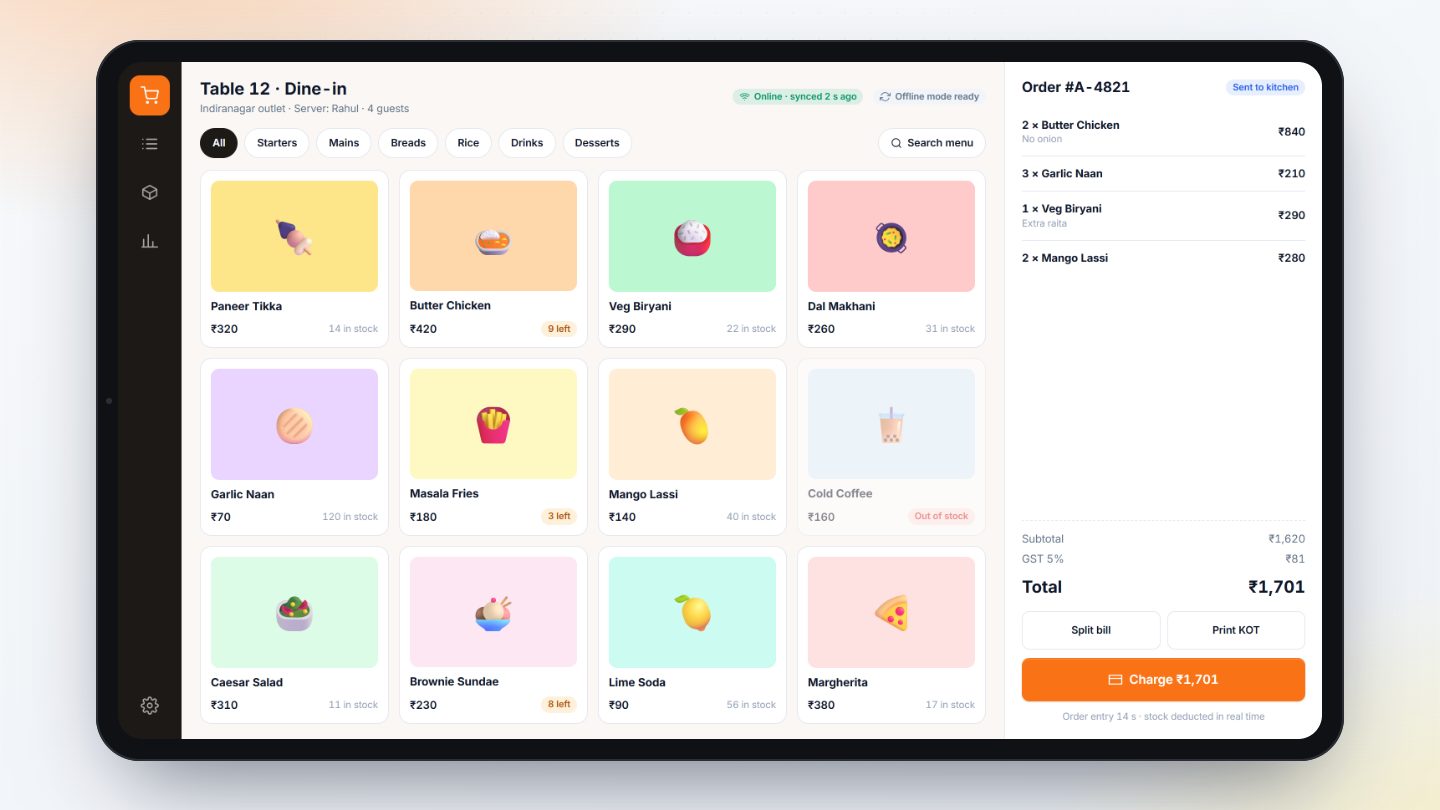
Hospitality / Restaurant SaaS
An offline-first cloud POS for 18 restaurants: faster orders, accurate stock
- Challenge
- A legacy desktop POS caused crashes, slow orders and unreliable stock counts across 18 restaurants during weekend rushes.
- Outcome
- An offline-first cloud POS with real-time inventory sync cut order time to 14 seconds and removed rush-hour downtime.
Read the case study: An offline-first cloud POS for 18 restaurants: faster orders, accurate stock
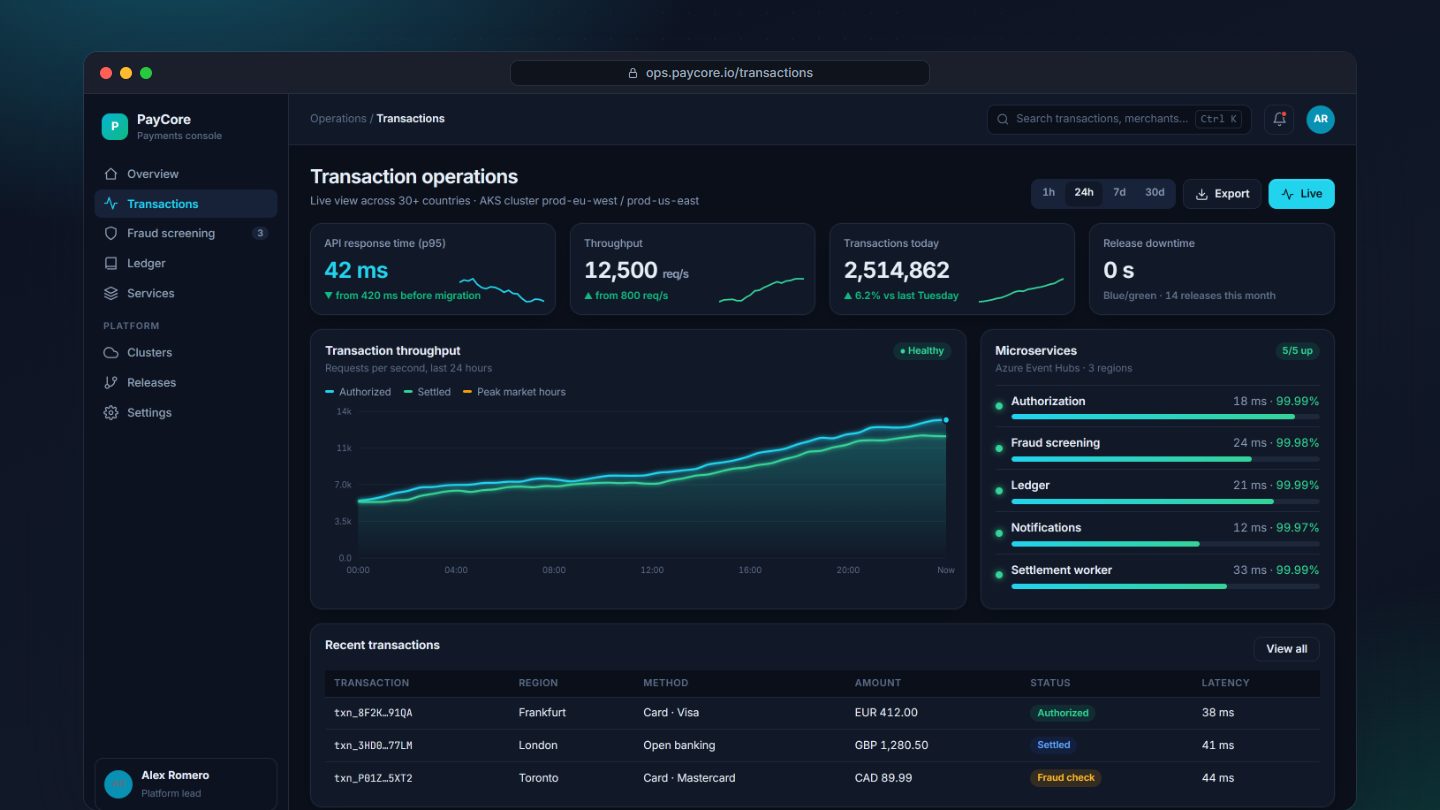
Fintech / Payments
Cutting payment API latency from 420ms to under 45ms for a global payments platform
- Challenge
- A legacy monolithic payment gateway hit latency spikes at peak hours, causing checkout timeouts and limiting how far it could scale.
- Outcome
- A .NET Core microservices platform on Azure now serves over 2.5 million daily transactions with API responses under 45ms and zero-downtime releases.