
Hospitality / Restaurant SaaS
An offline-first cloud POS for 18 restaurants: faster orders, accurate stock
We built an offline-first cloud restaurant POS with real-time inventory sync for an 18-restaurant group, cutting order time from 45 to 14 seconds and inventory variance from 8.5% to under 0.5%.
Published
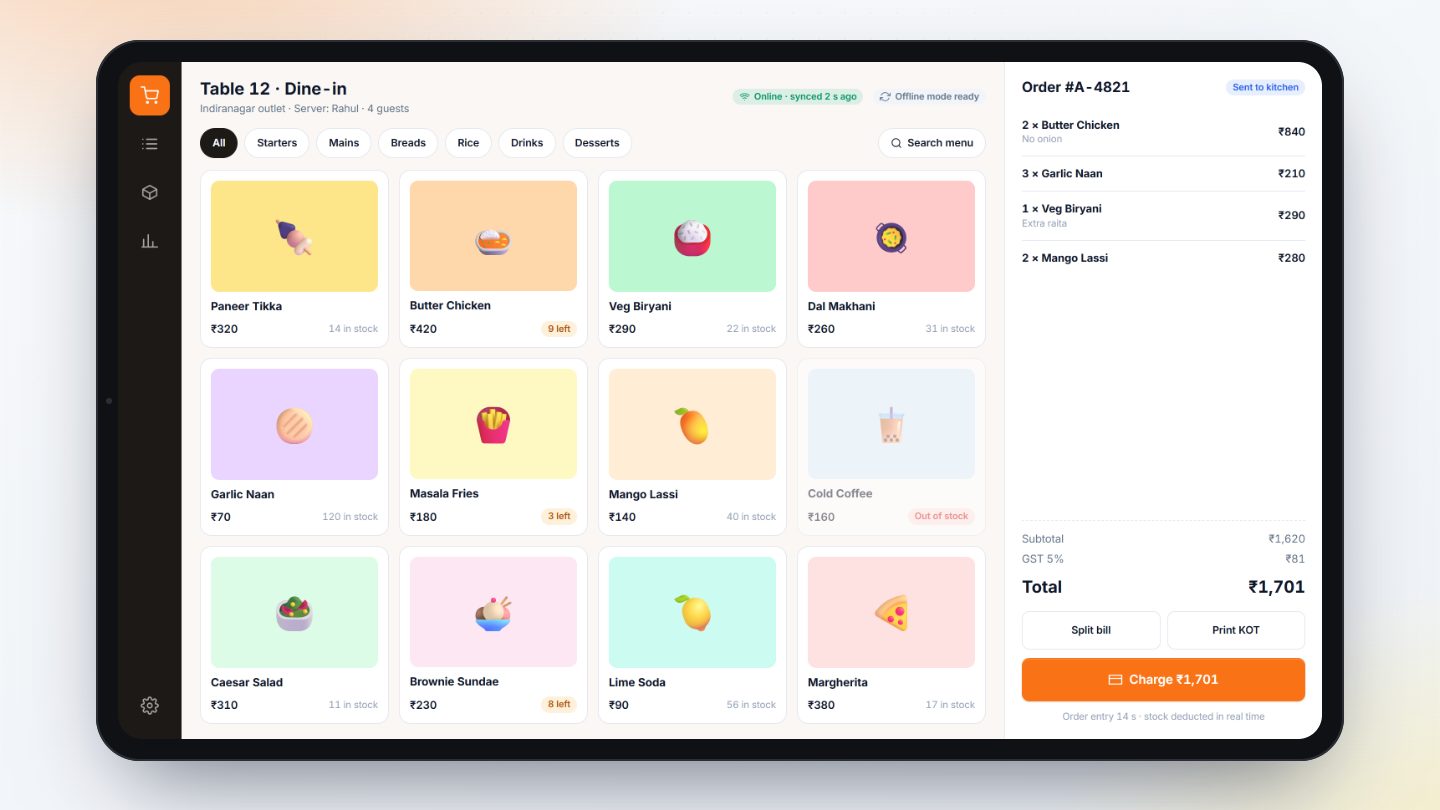
14 sec
per order, down from 45 seconds
<0.5%
inventory variance, down from 8.5%
Zero
rush-hour downtime, down from 3–4 incidents a weekend
Project snapshot
- Client
- Multi-location casual dining restaurant group
- Industry
- Hospitality & Restaurant Tech
- Region
- India (metropolitan area)
- Year
- 2026
- Scale
- 18 restaurants with high daily table turnover
- Timeline
- 4 months
- Engagement
- Fixed scope
The challenge
The group’s front-of-house POS terminals and central kitchen supply chain fell out of step during weekend rushes. Stock counts drifted and orders queued up.
The legacy desktop POS needed a local server at every restaurant, so real-time stock sync across locations was impossible, and it had no offline resilience. Crashes meant lost sales.
The result was lost revenue at peak hours, food wasted through inaccurate stock deductions and frustrated staff.
What we did
Phase 1: Offline-first sync
We designed a local-first architecture on SQLite with conflict-resolution rules.
Why: So orders keep flowing during internet outages.
Phase 2: Fast, touch-first apps
We built Blazor and React clients tuned for touch-screen POS hardware and handheld tablets.
Why: For quick order entry and minimal staff training.
Phase 3: Real-time inventory
We built an inventory deduction and multi-warehouse replenishment engine.
Why: To prevent stockouts and food waste with precise ingredient tracking.
Phase 4: One kitchen screen
We exposed secure, rate-limited REST and webhook APIs for food delivery aggregators.
Why: So delivery and direct online orders all land on a single kitchen display.
The hard part
Conflicting offline stock deductions
When several terminals synced at once after the network came back, their offline stock deductions could conflict, so we built rules to reconcile them.
How we kept risk low
We piloted the system at one high-volume location on a weekday before rolling updates out chain-wide.
The solution
Front-of-house tablets run a Blazor WebAssembly app backed by an embedded SQLite database, so every action is instant locally. Transactions sync asynchronously to a central .NET Core cloud back end through Azure Service Bus queues whenever connectivity is available. Kitchen display screens receive live order updates over SignalR WebSocket connections.
Tech stack
- Back end
- .NET Core Web API, SignalR
- Front end
- Blazor WebAssembly, React.js
- Database
- SQL Server (cloud), SQLite (local edge cache)
- Cloud
- Microsoft Azure (App Service, Service Bus)
- DevOps
- GitHub Actions, Docker
- Other
- Thermal printer SDKs, Razorpay payments
Results
| Metric | Before | After | How it was measured |
|---|---|---|---|
| Order processing time | 45 seconds | 14 seconds | POS transaction audit timestamps |
| Inventory variance | 8.5% monthly discrepancy | Under 0.5% | Monthly physical stock audits |
| Downtime during rush hours | 3–4 incidents per weekend | Zero | System uptime monitoring logs |
Faster table turnover at weekend dinner rushes and noticeably less stress for staff.
What the client said
Our kitchen operations are running smoother than ever. Orders from multiple channels sync instantly, and we haven’t lost a single minute of sales to network glitches.
Lessons learned
We would tune the receipt printer driver protocols earlier in the project.
What’s next
AI-powered demand forecasting to plan daily kitchen prep quantities.
Related case studies
E-Commerce / Logistics
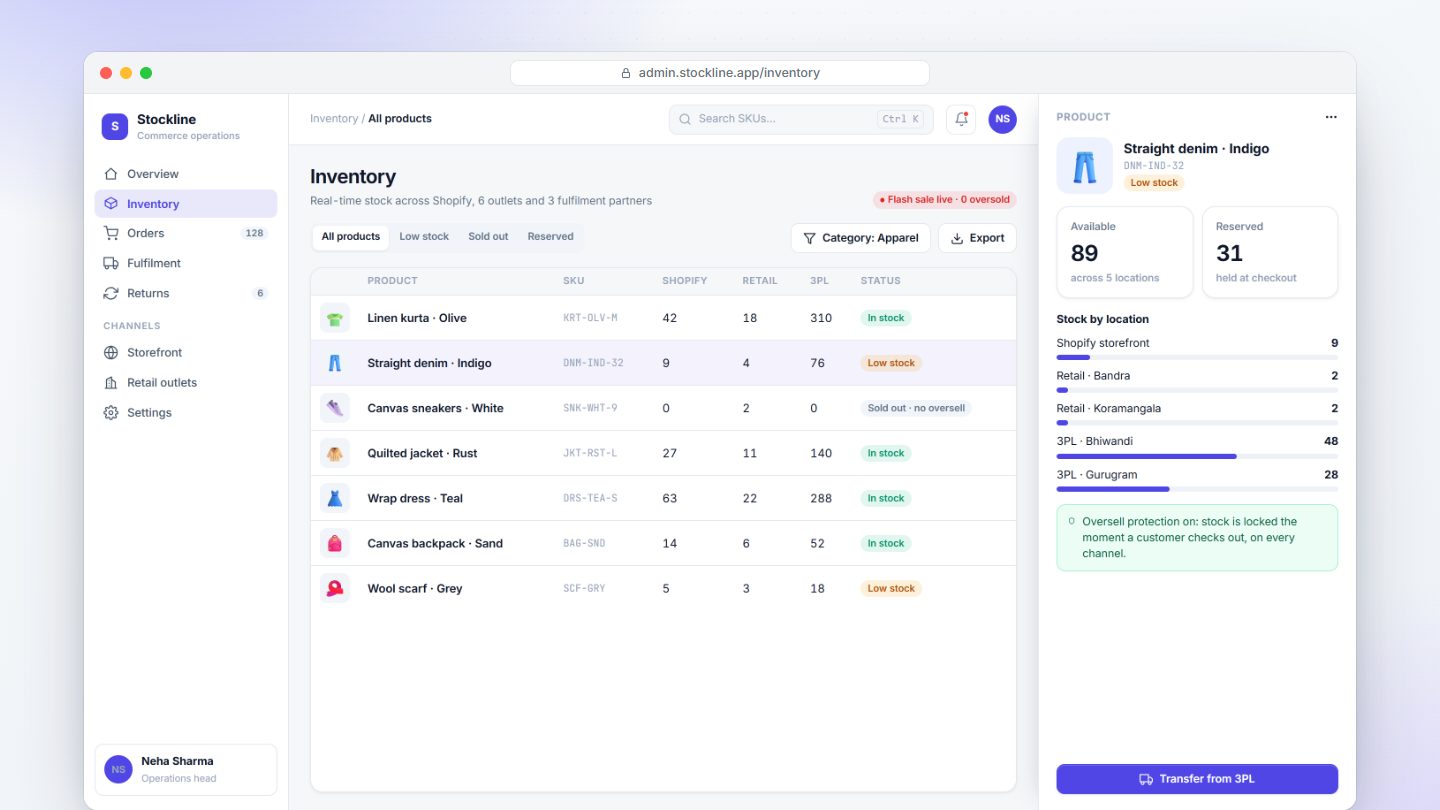
Headless e-commerce and real-time inventory sync for a D2C apparel brand
- Challenge
- Inventory was out of sync between the Shopify store, retail outlets and logistics partners, so flash sales led to overselling and late deliveries.
- Outcome
- A real-time inventory hub and headless storefront removed overselling and cut fulfillment processing from 24 hours to under 2.
Read the case study: Headless e-commerce and real-time inventory sync for a D2C apparel brand
Cloud Infrastructure / DevOps
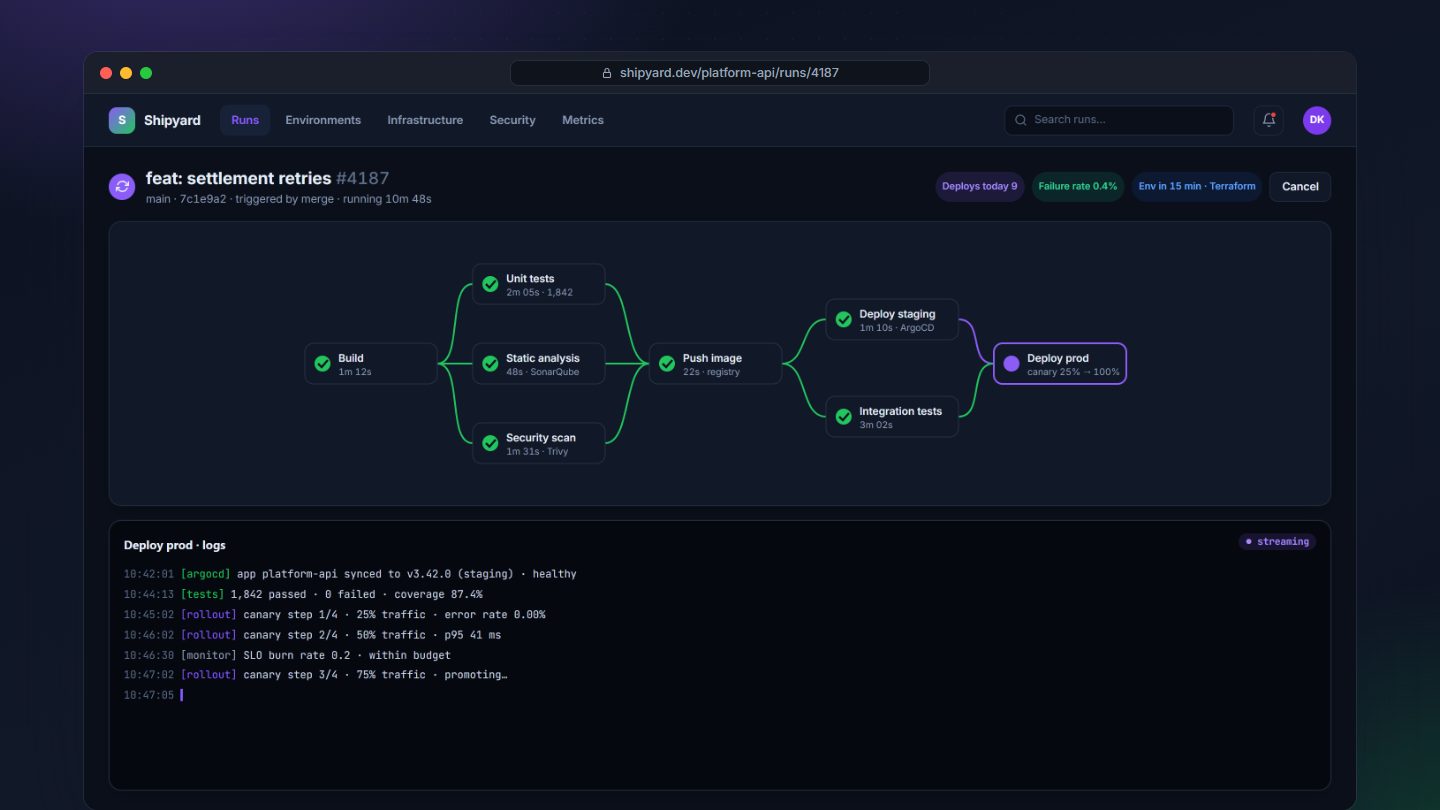
DevOps modernization: from three-week releases to deploying several times a day
- Challenge
- Manual deployments and inconsistent environments meant releases took over three weeks and configuration drifted between stages.
- Outcome
- Infrastructure as code and automated CI/CD on AWS and Azure now let the team release several times a day.
Read the case study: DevOps modernization: from three-week releases to deploying several times a day